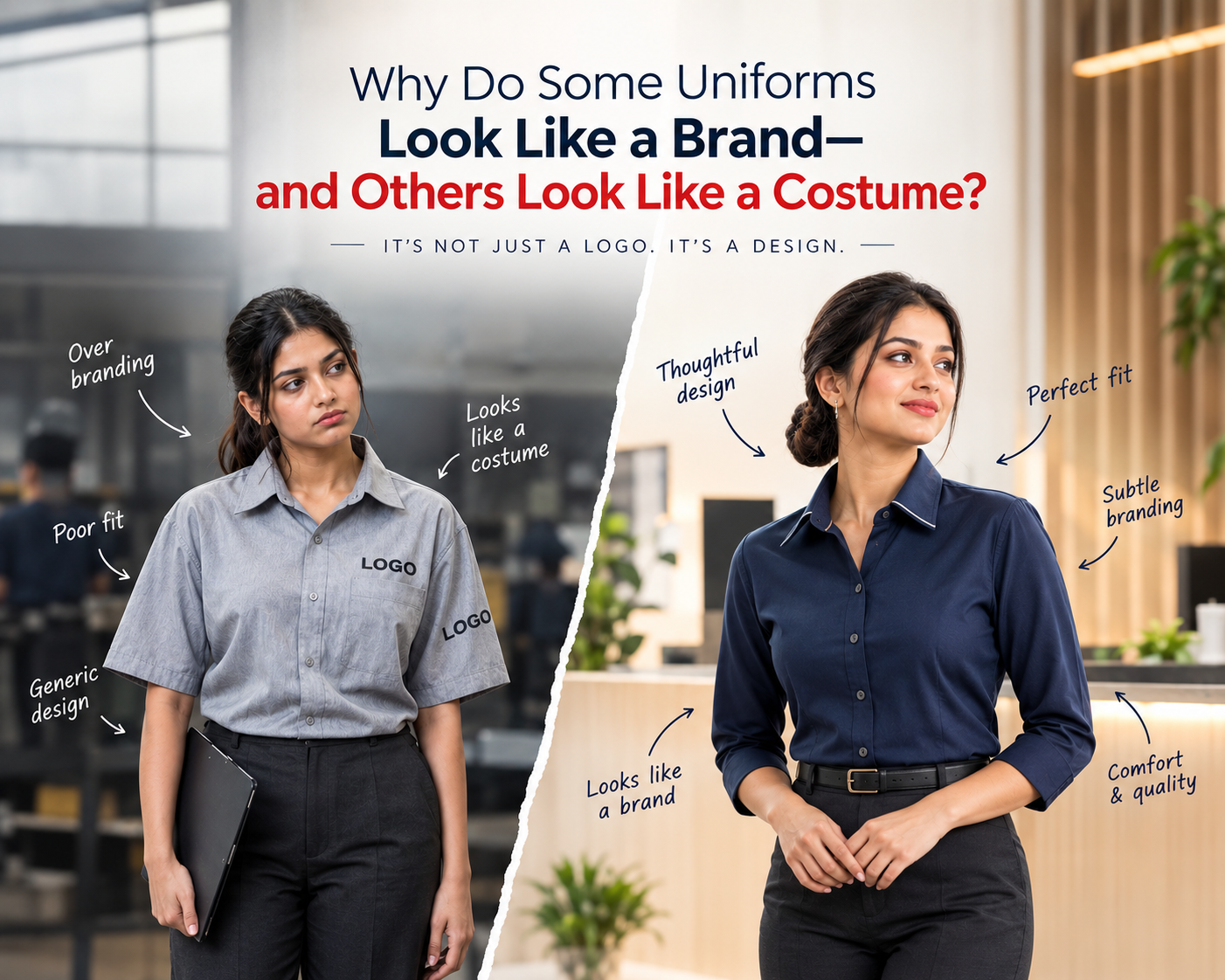
Custom Workwear Fabric: How to Select the Perfect One for Your Team
A new uniform can look impressive when it comes out of the package. The colour is right, the logo is neatly placed, and everyone suddenly looks like part of the same team. But what happens four or five hours into a busy shift?
If the fabric feels heavy, traps heat, restricts movement or becomes uncomfortable after repeated washing, that polished appearance does not mean much to the person wearing it.
That is why custom workwear fabric should never be selected simply because it looks good or fits the budget. The fabric sits against an employee’s skin, moves with the body, faces regular washing and has to perform in the environment where the work actually happens.
The best uniform is not the one that looks perfect for ten minutes. It is the one that still feels right after a full working day.
So, how do you choose it? Start with the job, not the fabric catalogue.
Why Custom Workwear Fabric Matters More Than You Think
When businesses order uniforms, the conversation often revolves around colour, design, logo placement and price. Employees experience something different.
They notice whether the shirt feels comfortable after several hours. They notice whether it allows them to move freely. They notice how it feels on a hot day and whether it still looks presentable after weeks of washing.
A well-selected custom workwear fabric can influence:
- Comfort during long working hours
- Breathability in warm environments
- Freedom of movement
- Durability during daily use
- Appearance after washing
- Maintenance requirements
- Overall uniform lifespan
This is why fabric selection should not be treated as a small purchasing detail. It is part of designing a uniform that people can actually work in.
1. Start With the Job, Not the Fabric
There is no single fabric that is perfect for every workplace.
Think about a hotel receptionist standing at a front desk. The uniform may need to maintain a polished appearance throughout the day.
Now picture a warehouse employee lifting, walking and moving products for several hours. Their workwear has a completely different job to do.
A restaurant employee may work around heat, food splashes and frequent laundering. A healthcare worker may need comfortable clothing that is practical throughout a long shift.
Before choosing a fabric for custom uniforms, ask:
- Where will the uniform be worn?
- How physically demanding is the job?
- How many hours will employees wear it?
- Is the workplace hot, humid or air-conditioned?
- Will the garment be washed frequently?
- Will it face dust, moisture, stains or heavy wear?
The answers will narrow down your choices much more effectively than simply asking which fabric is most popular.
2. Understand What Different Fabrics Offer
Cotton is widely appreciated for its soft feel and breathability. It can work well in many professional garments, depending on its weight, weave and finishing.
Polyester is commonly used in workwear because of characteristics such as strength, durability, crease resistance and quick drying. It can be useful for uniforms that face regular washing and active use.
Cotton-polyester blends can provide a practical middle ground. Depending on the blend ratio and construction, they can balance comfort, durability, appearance and maintenance.
Twill is a weave commonly associated with sturdy workwear. It can give garments a structured appearance and is often considered for uniforms that need a more robust feel.
Poplin and Oxford fabrics are also commonly used for professional shirts and uniforms.
But there is an important detail that is easy to overlook:
The name of a fabric does not tell the entire story.
Fibre content, fabric weight or GSM, weave, finishing and garment construction can all affect how the final uniform feels and performs.
3. Think About the Entire Working Shift
A uniform should not be judged after five minutes in front of a mirror.
It should be judged after an employee has worn it for hours.
Imagine a restaurant employee working through a busy lunch service in a warm kitchen. A fabric that feels perfectly fine in the morning may feel very different after hours of movement and heat.
For warm workplaces, consider:
- Breathability
- Fabric weight
- Air permeability
- Moisture handling
- Freedom of movement
- Length and intensity of the shift
A breathable uniform fabric can improve comfort, but breathability is not determined by fibre type alone. Fabric construction, weight, finishing and garment design also play important roles.
This is particularly worth considering when selecting workwear for warm and humid regions.
4. Balance Comfort With Durability
This is where choosing custom workwear fabric becomes more thoughtful.
A very soft fabric may feel excellent but may not be suitable for demanding daily work. On the other hand, a highly durable fabric may cope with heavy use but may not provide the comfort employees need during long shifts.
The goal is not to maximise one characteristic.
The goal is to find the right balance between:
Comfort + Durability + Appearance + Maintenance + Cost
Consider an industrial team whose uniforms are washed repeatedly. A fabric that maintains its structure and appearance over time may provide better value than a cheaper option that needs frequent replacement.
The strongest fabric is not automatically the best fabric. The softest fabric is not automatically the best either.
The best workwear fabric is the one that matches the actual demands of the job.
5. Consider How the Uniform Will Be Washed
A uniform may spend hundreds of hours being worn, but it also spends a lot of its life in the laundry.
Before placing a bulk order, think about the expected washing routine.
Will employees wash the garments at home? Will the uniforms go through commercial laundry? How often will they be cleaned?
Repeated washing can affect colour, shape and overall appearance. That makes care requirements an important part of custom workwear fabric selection.
This matters even more for businesses with large teams. If the uniforms lose their appearance quickly, the consistent professional image the company wanted can disappear much sooner than expected.
A fabric that suits the workplace should also suit the way the workplace maintains its uniforms.
6. Think About Kerala’s Warm and Humid Climate
For businesses in Kerala and other warm regions, climate should be part of the fabric discussion from the beginning.
An employee working inside an air-conditioned office may have very different requirements from a delivery worker, field technician, construction employee or outdoor service team.
When considering custom workwear fabric for warm conditions, look at:
- Fabric weight
- Breathability
- Air circulation
- Moisture handling
- Level of physical activity
- Indoor or outdoor use
It is also important not to assume that one fibre will solve every climate-related problem. The construction and finishing of the fabric can make a meaningful difference to how a garment performs.
7. Look Beyond the Initial Price
Here is a simple idea worth remembering:
The cheapest uniform is not necessarily the most economical uniform.
Imagine two companies ordering workwear.
Company A chooses a cheaper option that looks good initially but loses its appearance quickly and requires replacement sooner.
Company B chooses a fabric that costs slightly more but is better suited to the working environment, regular washing and expected lifespan.
The lower invoice does not necessarily represent the lower overall cost.
When comparing uniform options, consider:
- Expected lifespan
- Replacement frequency
- Washing requirements
- Employee comfort
- Colour retention
- Shape retention
- Maintenance effort
- Suitability for the workplace
- Total cost over time
This way of thinking turns fabric selection from a simple purchase decision into a long-term business decision.
A Practical Checklist Before You Order
Before finalising your custom workwear fabric, take a few minutes to answer these questions:
- What type of work will the uniform support?
- How many hours will employees wear it each day?
- Is the workplace hot, humid, dusty or air-conditioned?
- How much movement does the job require?
- How frequently will the uniform be washed?
- Is heavy-duty durability necessary?
- Does the uniform need a crisp professional appearance?
- Will employees work indoors, outdoors or in both environments?
- How long should each uniform reasonably last?
- What budget makes sense over the full life of the garment?
If these questions are answered before production begins, it becomes much easier to choose a fabric that works in the real world.
Fabric Is Only One Part of a Good Uniform
Even an excellent fabric cannot create a good uniform on its own.
Fit, pattern, stitching, pocket placement, buttons, zippers, ventilation, finishing and logo placement all influence the finished garment.
That is where professional custom uniform stitching can make a difference.
A business does not have to start with a standard garment and hope it works. The uniform can be planned around the people who will wear it and the environment where they will work.
ROMOS Garments provides custom uniform solutions for businesses and institutions, including corporate, healthcare, educational, hospitality and industrial workwear. Its uniform process considers requirements such as fabric and style selection, tailoring, branding and quality checking.
For a business placing a bulk order, that type of conversation can prevent a common mistake: selecting a fabric first and thinking about the working environment afterwards.
The Perfect Fabric Is the One That Works When Nobody Notices It
The most successful uniform does something interesting.
When it is doing its job properly, employees stop thinking about the uniform.
They can move comfortably. They can work through their shift. The fabric feels appropriate for the environment. The garment remains presentable after repeated use and washing.
That is when workwear becomes more than clothing.
It becomes part of the working experience.
So, when selecting custom workwear fabric, look beyond the colour, catalogue photograph and initial price. Think about the employee who will wear it halfway through a busy shift, the washing machine that will clean it again and again, and the business that needs the uniform to represent its identity for months to come.
A good uniform should look professional on day one. A well-planned uniform should still feel right much later.
That is the real test of good workwear.